Shopify SEO app · Furniture
SEO for Furniture Stores on Shopify: room by room, style by style
Furniture buyers research extensively before purchasing. Sauron generates room-specific, style-targeted, dimension-precise titles that match how high-consideration buyers actually search.
Sauron generates this, automatically
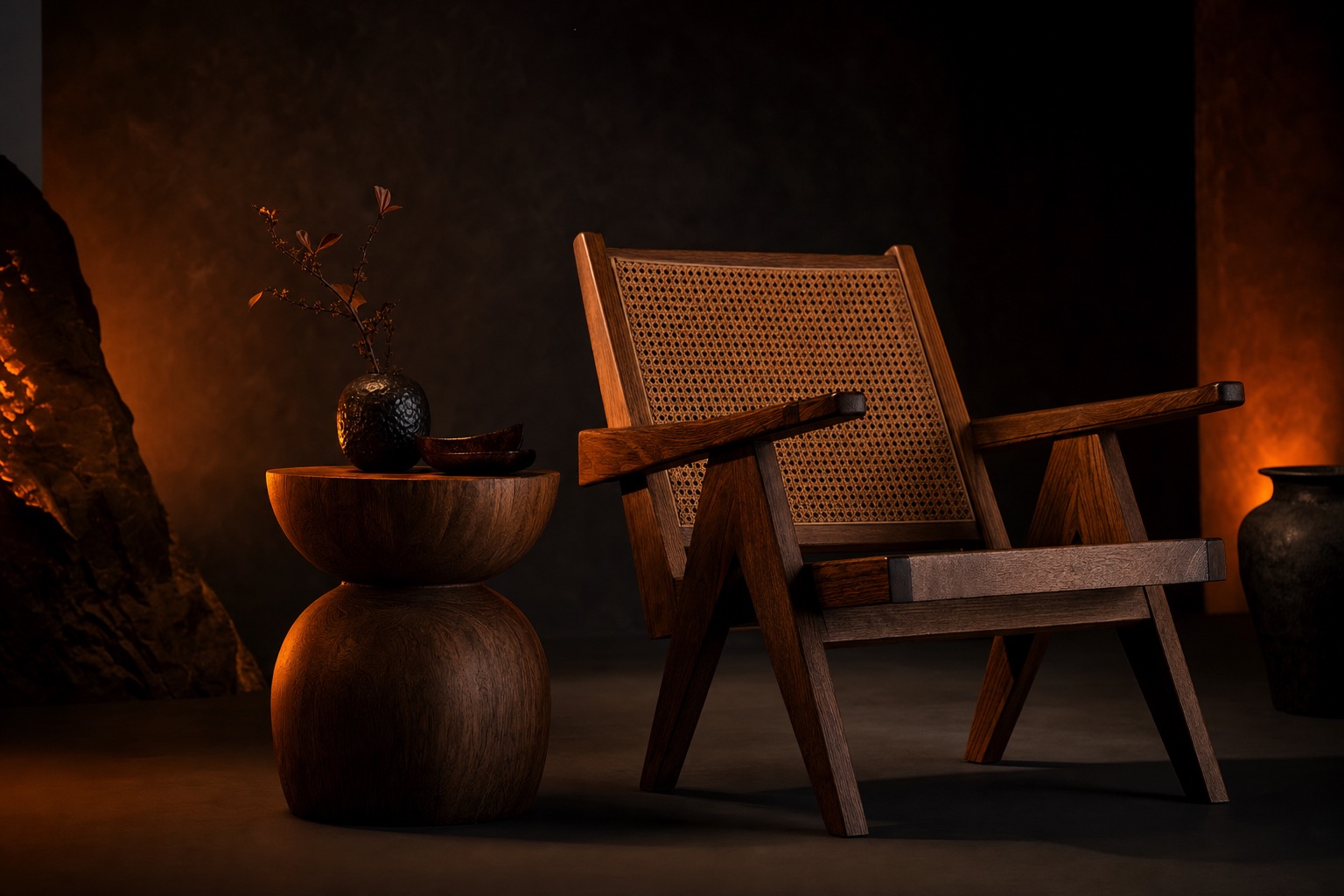
SEO for Furniture stores on Shopify
Furniture is a high-consideration, high-value niche. Shoppers research by room (living room, bedroom, dining), style (Scandi, industrial, mid-century), material (oak, walnut, velvet, leather), and specific dimensions. Google Shopping is dominant for furniture searches, making Product schema essential.
Room-specific + style-specific + material keywords ('Scandi solid oak coffee table', 'velvet accent chair mid-century') have far less competition than head terms and come from shoppers who already know what they want.
Guide
The Shopify furniture SEO guide
Furniture is a slow purchase. People measure the room, compare fabrics, read about materials and come back three or four times before they buy a sofa or a dining table. That long research cycle is good news for SEO: every one of those visits starts with a search, and most of them are far more specific than "sofa".
This guide covers how furniture shoppers search, how to build collections around those searches, what a furniture product page needs to answer, which questions are worth writing about, and what to do if you also have a showroom. It's the approach Sauron automates, written out so you can follow it by hand.
How furniture shoppers search
The single-word searches are enormous and belong to the big retailers and marketplaces. Shoppers quickly narrow them down, though, and the words they add are the ones that decide whether a piece fits their room: shape, size, material, style.
| Pattern | Searches (monthly volume) |
|---|---|
| Product type alone | coffee table — 246,000 bed frame — 246,000 sofa — 201,000 dining table — 135,000 |
| Type or shape | sleeper sofa — 110,000 sectional sofa — 90,500 platform bed — 90,500 modular sofa — 60,500 round coffee table — 60,500 round dining table — 49,500 extendable dining table — 40,500 |
| Material | leather sofa — 33,100 upholstered bed frame — 22,200 solid wood dining table — 18,100 velvet sofa — 8,100 |
| Style | mid century modern coffee table — 14,800 boucle chair — 6,600 mid century modern sideboard — 3,600 boucle sofa — 2,400 |
| Size and space | small sofa — 14,800 small sofa for apartment — 2,900 apartment size sofa — 2,400 |
| Local | furniture stores near me — 1,000,000 furniture store — 550,000 |
Shape is the modifier most stores leave out. "Round coffee table" and "extendable dining table" are big searches in their own right, yet product titles often just say "Coffee Table" and leave the shape to the photo. Size is the other one: people living in small spaces search for it directly, and a sofa that fits an apartment is a different product to them, not a filter.
The local searches are the biggest of all, but they're a different game: they're answered by the map results and Google Business Profiles, not by product pages. More on that below if you have a showroom.
Collections: type, shape, material and size before room
Most furniture stores organise by room ("Living Room", "Bedroom"), which is how you'd walk through a showroom. It isn't how people search, though: hardly anyone types "living room" when they want a sofa. Room collections work well as broad parents that group the specific collections underneath them. The specific collections are the ones that rank.
Give each collection one search to target, and don't let two collections chase the same one.
| Collection | Target search | Role |
|---|---|---|
| Sofas | sofa | Broad parent. Links down to the specific sofa collections |
| Sectional Sofas | sectional sofa | Specific. Large demand, clear intent |
| Sleeper Sofas | sleeper sofa | Specific. A distinct product, not a filter |
| Small Sofas | small sofa | Specific. Also catches apartment searches |
| Round Dining Tables | round dining table | Specific. Shape is the search |
| Extendable Dining Tables | extendable dining table | Specific |
| Solid Wood Dining Tables | solid wood dining table | Specific, but only if every table in it is solid wood |
Don't build a collection with one or two products in it; thin pages rarely rank. And have each broad parent's description link to its children, so Google understands the structure.
Sauron reads your catalog, finds category searches you have products for but no collection, and proposes the collection with its products already in it; on Growth and Scale it builds them for you within a monthly allowance, and on Starter you approve each one. Broad parents keep the broad term and each child is steered to its own more specific keyword. Where materials or colours are set as product options, it can also suggest a split such as "Velvet Sofas" under "Sofas", but those are suggestions for you to approve, never made on its own.
Product pages: answer the questions that stop a purchase
A furniture buyer's biggest fear is getting it home and finding it doesn't fit, doesn't match, or isn't what the photo suggested. The product page that answers those fears ranks better and sells better, because the same details are what people search with.
- Title pattern: style + material + product type, then shape or size. "Mid Century Walnut Round Coffee Table" beats "The Arlo Table" for search, even if Arlo is the name you use in-store.
- Full dimensions: width, depth and height, plus seat height for sofas and chairs, and the diagonal depth that decides whether a sofa fits through a doorway.
- The exact material. "Solid oak", "oak veneer" and "oak effect" are different products at different prices, and saying "solid" about veneer is a return waiting to happen.
- Fabric, finish and care, delivery lead time, and whether it arrives assembled.
- Descriptive alt text on product images: "walnut round coffee table with tapered legs in a bright living room", not "IMG_0412".
- Product structured data, so Google can show price and availability. Most themes include basic markup; check yours with Google's Rich Results Test.
Sauron writes each product's SEO title and meta description from its own keyword research, using your product's real attributes, and can rewrite thin descriptions. It checks candidate keywords against the product's own title and tags, so a fabric sofa isn't given a "leather sofa" keyword because the leather search is bigger. It can only use details your product data contains, so the dimensions and materials need to be in there first.
Content for a long research cycle
Because furniture takes weeks to decide on, the questions people ask along the way are a real opportunity. They're searched in volume, big retailers answer many of them badly, and a good answer is a natural place to link to the products that fit.
| Question | Monthly searches | Links naturally to |
|---|---|---|
| standard dining table height | 6,600 | Dining tables, dining chairs |
| how to clean a fabric sofa | 6,600 | Fabric sofas, care products |
| sofa vs couch | 5,400 | Sofas |
| coffee table height | 2,900 | Coffee tables |
| what is mid century modern | 2,900 | Mid-century collections |
| what size rug for living room | 1,900 | Rugs, living room |
| sofa dimensions | 1,300 | Sofas, small sofas |
| how to clean velvet sofa | 1,300 | Velvet sofas |
| how to measure a sofa | 720 | Sofas |
| solid wood vs veneer | 390 | Solid wood collections |
Sizing and measuring guides are especially worth writing, because they catch people at the moment they're deciding what will fit, and they reduce returns. Link each one to the collections it mentions.
On Growth and Scale, Sauron's blog engine picks topics from your catalog, weighs them by search demand and fit with your brand, and writes posts that link to three to six of your real products. You choose which days it publishes, and posts that fail its quality checks wait for your review instead of going live.
If you have a showroom
"Furniture stores near me" is searched a million times a month in the US, but those results come from Google's map listings. Winning there depends on a complete, active Google Business Profile, reviews and consistent address details. Your product pages won't rank for it, and Sauron doesn't manage Business Profiles.
Competing with the big furniture retailers
You won't outrank a national retailer on "sofa" or "coffee table", and you don't need to. Independent furniture stores win on specificity: a style in a material ("mid century modern sideboard"), a size for a particular space ("small sofa for apartment"), a construction detail the big catalogues don't spell out. A focused collection that exactly matches one of those searches can beat a giant's generic category page.
Links still matter. Interior designers, home bloggers, local press and makers you work with are the natural sources for a furniture store. Sauron's backlink network, on paid plans, exchanges relevant links between non-competing stores' blog posts, which is one way to start.
Checklist
- List the searches your products match: type, shape, material, style, size.
- Use room collections as broad parents and build specific collections underneath them.
- Give each collection one target search, and make sure no two collections share one.
- Rewrite product titles as style + material + type, with shape or size where it matters.
- Add full dimensions, seat height and doorway depth to every large item.
- Say exactly what the material is: solid, veneer or effect.
- Write descriptive alt text for product images.
- Publish sizing and measuring guides and link them to the matching collections.
- If you have a showroom, complete your Google Business Profile.
What Sauron doesn't do for furniture stores today: it writes alt text for collection images, but not yet for product images. It doesn't manage Google Business Profiles, filter URLs or canonical tags, and it won't invent dimensions or materials your product data doesn't state. Plan limits apply: Starter covers catalogs up to 300 products with 50 AI generations and 15 keyword research runs a month; Growth (up to 2,500 products, 500 generations) runs full keyword research on up to 150 products per run and Scale (up to 10,000, no generation cap) on up to 400, with the rest taking keywords from their collection's research or an AI-only fallback. Blog posts, automatic collection building and structured data are Growth and Scale features.
Search volumes are average US monthly Google searches, pulled from DataForSEO in September 2026. They're a guide to relative demand, not a traffic promise.
The challenge
Why furniture store SEO is uniquely hard
Dimensions are search keywords
Buyers search by dimension before they search by style. 'Sofa under 200cm wide' and '6-seater dining table' are high-intent searches most stores don't optimise for.
Sauron writes titles from your product data, so when dimensions and seating capacity are in it they can go in the title: 'Solid Oak Dining Table 180×90cm | Seats 6–8' rather than 'Dining Table'.
Material and finish must be explicit
Buyers need to know material before clicking. 'Oak' vs 'oak veneer' vs 'oak effect laminate' are very different products with different search volumes.
Sauron uses the material and finish stated in your product data when writing titles, and checks keywords against it, so veneer isn't sold as solid wood.
Google Shopping dominates furniture SERPs
Furniture searches trigger Google Shopping ads at the top of every SERP. Organic results appear lower, making rich results (star ratings, price) essential for click-through.
On Growth and Scale, Sauron adds Product structured data with price and availability through its theme app embed, so your organic results can show those details. Star ratings need rating data from a review app.
Keyword research
Keywords furniture shoppers actually search
Furniture dimensions are critical purchase criteria ('3-seater sofa', '160cm dining table', '90x200cm bed frame') but rarely appear in product titles, missing the dimension-qualified searches that indicate buying intent.
Sauron generates 10 keyword candidates per product, validates each against real Google search volumes, and automatically selects the best primary keyword.
See how product SEO works →Sample keywords for Furniture stores. Sauron finds these automatically
Collection architecture
Recommended collection structure for furniture SEO
Your collection pages are often the highest-traffic SEO entry points. A well-structured collection architecture creates multiple keyword-targeted entry points into your catalog.
Competing with mega-brands: the long-tail strategy
Generic category terms in furniture are dominated by established brands with enormous domain authority. Independent Shopify stores compete and win on specificity: style-specific, ingredient-specific, and audience-specific long-tail keywords where niche positioning is a strength.
Most impactful for Furniture
Sauron features that matter most for furniture stores
Product SEO on Autopilot
Doing product SEO properly means researching a keyword, studying what already ranks, writing a title and description tha…
Learn more →Product SEO on Autopilot
Doing product SEO properly means researching a keyword, studying what already ranks, writing a title and description tha…
Learn more →Product SEO on Autopilot
Doing product SEO properly means researching a keyword, studying what already ranks, writing a title and description tha…
Learn more →Questions
Furniture SEO, frequently asked
Should furniture dimensions be in the SEO title? +
Yes, especially for large items like sofas, dining tables, and beds where dimensions are a primary filter criterion. Include width for sofas, seating capacity for dining tables, and frame size for beds in the title.
How do furniture stores compete with IKEA and Wayfair? +
Material quality differentiation ('solid oak' vs 'oak effect', 'handcrafted', 'sustainable') and style specificity where indie stores can win. 'Artisan solid walnut mid-century sideboard' competes very differently to 'sideboard'.
Related niches
Explore similar Shopify SEO guides
Start your furniture store's SEO today
A 7-day free trial on every plan.