Shopify SEO app · Jewelry
Shopify SEO for Jewelry Stores: on autopilot
From gemstone attributes to gift-occasion keywords, Sauron generates search-winning titles and alt text for every piece in your collection, automatically.
Sauron generates this, automatically
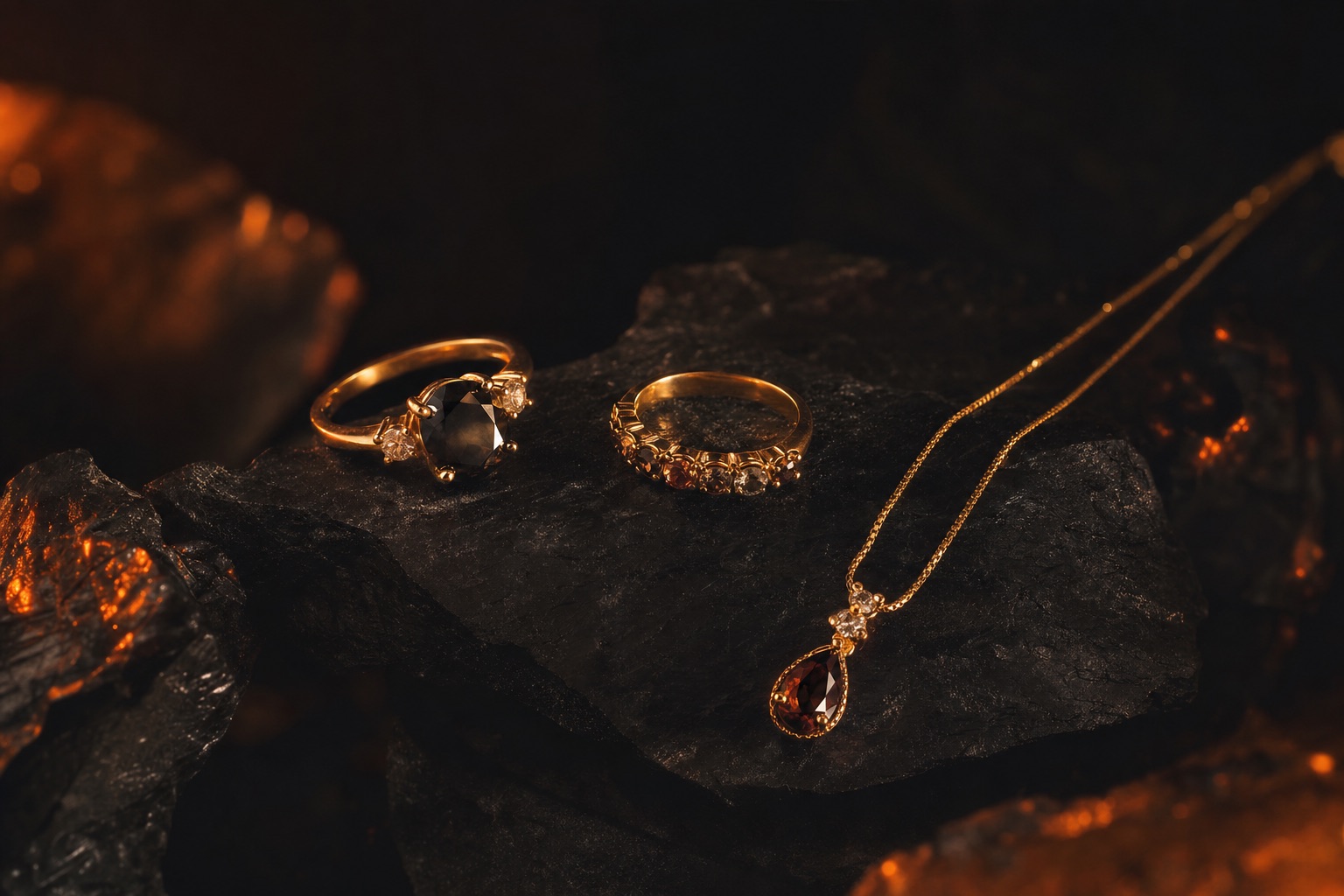
SEO for Jewelry stores on Shopify
Jewelry is one of the most visually competitive niches on Shopify. Shoppers search by material, occasion, gemstone, and price point, creating hundreds of long-tail keyword opportunities most stores miss. Strong image SEO and product schema are non-negotiable.
Gift-occasion keywords (Valentine's Day, Mother's Day, birthday) spike predictably. Stores that rank for 'birthstone ring for mum' or 'dainty gold necklace gift' dominate a high-intent, low-competition segment.
Guide
The Shopify jewelry SEO guide
Jewelry is a hard category to rank in and an easy one to rank in badly. The head terms ("necklaces", "earrings", "rings") belong to marketplaces and national retailers, and a Shopify store with forty products isn't going to take them. But jewelry shoppers rarely stop at the head term. They add a metal, a stone, a style, a name, or a problem they're trying to solve ("hypoallergenic", "waterproof"), and those searches are both large and far less contested.
This guide covers how jewelry shoppers actually search, how to build collections that match those searches, what to fix on product pages, and which blog topics are worth writing. It's the same approach Sauron automates, written out so you can do it by hand if you prefer.
How jewelry shoppers search
Almost every jewelry search is built from the same parts: a product type plus one or more modifiers. The product type alone is where the big retailers live. The modifiers are where an independent store can win, because each one narrows the results to stores that actually sell that exact thing.
| Pattern | Searches (monthly volume) |
|---|---|
| Product type alone | necklaces — 201,000 earrings — 246,000 bracelets — 201,000 |
| Metal + type | gold necklace — 74,000 gold hoop earrings — 60,500 sterling silver necklace — 33,100 14k gold necklace — 27,100 |
| Stone or birthstone | birthstone ring — 49,500 sapphire ring — 40,500 birthstone necklace — 33,100 opal ring — 33,100 |
| Style | stacking rings — 40,500 huggie earrings — 22,200 layered necklace — 14,800 dainty gold necklace — 8,100 |
| Personalised | initial necklace — 40,500 name necklace — 33,100 personalized necklace — 12,100 |
| Problem or property | hypoallergenic earrings — 90,500 waterproof jewelry — 33,100 gold filled jewelry — 18,100 tarnish free jewelry — 5,400 |
| Occasion | mothers day jewelry — 6,600 valentines day jewelry — 2,900 |
Two things stand out. First, the "problem or property" searches are bigger than most stores expect: more people search "hypoallergenic earrings" than "gold necklace". If your pieces are genuinely nickel-free, waterproof or tarnish-resistant, that is a collection, not a line buried in a description. (Only claim it if it's true. These are exactly the claims that turn into returns and chargebacks.)
Second, occasion searches are smaller than they feel. "Mothers day jewelry" is 6,600 searches a month averaged across the year; it spikes in spring and is near zero the rest of the time. Occasions work better as gift guides on your blog, linking to evergreen collections, than as collections of their own.
Build collections around searches, not your supplier's categories
Collection pages are usually a jewelry store's best ranking pages. They hold many products, they match category-style searches, and Google treats them as the answer to "show me options". The mistake is building them around how you stock products ("New In", "Summer Edit", "Bestsellers") rather than how people search.
Give every collection one search it's meant to rank for, and make sure no two collections chase the same one. If "Gold Necklaces" and "Gold Chains" both target "gold necklace", they split the signal and neither ranks well.
| Collection | Target search | Role |
|---|---|---|
| Necklaces | necklaces | Broad parent. Unlikely to rank on its own; it links down to the specific collections |
| Gold Necklaces | gold necklace | Specific. Real demand, and winnable with a focused page |
| Initial Necklaces | initial necklace | Specific. Personalised searches convert well |
| Birthstone Rings | birthstone ring | Specific. Can link to each month's stone |
| Huggie Earrings | huggie earrings | Specific. A style term with less competition than "hoop earrings" |
| Hypoallergenic Earrings | hypoallergenic earrings | Specific, but only if every product in it genuinely is |
A few rules keep this from backfiring. Don't create a collection with only one or two products; a thin page rarely ranks and looks empty to shoppers. Don't create a collection for every variant option ("Size 7 Rings") either. And link the broad parent down to its children in the collection description, so Google understands the hierarchy.
This is the part of jewelry SEO Sauron is built around. It reads your catalog, finds category searches you have products for but no collection, and proposes (or on Growth and Scale, builds) the collection with its products already in it. Broad parents keep the broad term; each child is steered to its own more specific term so they don't compete, and the parent's description links to its children.
Product pages: say exactly what the piece is
Jewelry shoppers search with precise material words, and those words mean different things. "Solid 14k gold", "gold vermeil", "gold filled" and "gold plated" are different products at different prices, and people search for each one ("gold filled jewelry" 18,100 a month, "gold vermeil" 14,800). A title that just says "Gold Necklace" misses the searcher who knows what they want, and one that says "gold" on a plated piece invites a return.
- Title pattern: style + material + product type, then the stone or distinguishing feature. "Dainty 14k Gold Initial Necklace" beats "The Ava Necklace" for search, even if Ava is the name you use in-store.
- Put measurable details in the description: chain length, pendant size, ring sizes available, clasp type, weight. These answer the questions that stop a purchase, and they're the long-tail words people search with.
- Separate products or variants? Keep size and chain length as variants. If a piece comes in gold and silver at very different prices, separate products usually rank better, because each can target its own metal search.
- Write alt text for every product image that says what's in it: "14k gold initial necklace, letter A pendant, worn on neck". Google Images is a real traffic source for a visual category like this one.
- Include Product structured data (price, availability, reviews if you have them), so Google can show those details in results. Most Shopify themes include basic Product markup; check yours with Google's Rich Results Test.
By hand, researching and writing an SEO title and meta description takes about 20 minutes per product: around 40 hours for a 120-piece jewelry catalog. In a production run on a 109-product store, Sauron did the whole catalog in under 20 minutes. It writes the SEO title and meta description for each product from its own keyword research (across the whole catalog on Growth and Scale), using your product's real attributes. It checks candidate keywords against the product's title and tags, so a sterling silver ring isn't given a "gold" keyword just because "gold" gets more searches.
Blog topics that bring jewelry buyers
The biggest jewelry searches of all are questions. Some are too big and too generic to target: "ring size chart" (165,000 a month) and "october birthstone" (246,000) are dominated by large publishers. The better targets are questions a jewelry store is genuinely the right source for, where the answer leads naturally to a product.
| Question | Monthly searches | Links naturally to |
|---|---|---|
| how to measure ring size | 74,000 | Every ring collection |
| lab grown vs natural diamond | 22,200 | Engagement or diamond collections |
| what is gold vermeil | 12,100 | Vermeil products |
| how to clean gold jewelry | 5,400 | Gold collections, care kits |
| what is 925 silver | 3,600 | Sterling silver collections |
| gold vermeil vs gold filled | 2,400 | Both material collections |
| does gold filled tarnish | 1,600 | Gold filled collection |
Each post should link to the collections and products it mentions. That's what turns an informational visitor into a shopper, and the internal links help those collections rank too. Gift guides for Valentine's Day, Mother's Day and Christmas fit here as well: publish them 6–12 weeks before the date, since new pages take that long to rank.
On Growth and Scale, Sauron's blog engine picks topics from your catalog, weighs them by search demand and fit with your brand, and writes posts that link to three to six of your real products. You choose which days it publishes, and posts that fail its quality checks wait for your review instead of going live.
Competing with the big jewelry retailers
You won't outrank a national chain on "engagement rings" (673,000 a month), and it isn't worth trying. Big retailers win broad terms because they have years of links and brand searches behind them. Where a small store wins is specificity: "moissanite engagement ring" (60,500), "paperclip chain" (2,400), a birthstone in a particular metal. A focused page that exactly matches a narrow search regularly beats a giant's generic category page.
Links still matter. A handful of genuine mentions from jewelry bloggers, local press, stylists or makers you collaborate with will move a small store further than any on-page change. Sauron's backlink network (on paid plans) exchanges relevant links between non-competing stores' blog posts, which is one way to start.
Checklist
- List the searches your products actually match, using the patterns above: metal, stone, style, personalised, property.
- Give each collection one target search, and make sure no two collections share one.
- Turn any true, searchable property (hypoallergenic, waterproof, tarnish-free) into its own collection.
- Rewrite product titles as style + material + type, using the exact material wording.
- Add chain lengths, sizes and dimensions to product descriptions.
- Write descriptive alt text for product images.
- Check your theme's Product structured data with Google's Rich Results Test.
- Publish the material explainers (vermeil, gold filled, 925 silver) and link them to the matching collections.
- Schedule gift guides 6–12 weeks before each gifting season.
What Sauron doesn't do for jewelry stores today: it writes alt text for collection images, but not yet for product images, so product image alt text is still yours to write. It doesn't photograph, retouch or generate product images. And it won't claim a material or property your product data doesn't state; if your listings don't say "hypoallergenic", neither will the copy.
Search volumes are average US monthly Google searches, pulled from DataForSEO in September 2026. They're a guide to relative demand, not a traffic promise.
The challenge
Why jewelry store SEO is uniquely hard
Product titles that don't say what the piece is
Most jewelry stores title products by collection name ('The Ava Necklace') and leave the SEO title as the default, so the metal, stone and style shoppers search for never reach Google.
Sauron generates unique SEO titles per product, pulling in material, gemstone, and style attributes automatically from your product data.
Image SEO is left blank
Jewelry stores upload beautiful photography but leave alt text empty, invisible to Google Image Search and screen readers.
Sauron writes alt text for your collection images with a vision model. Product image alt text isn't automated yet; the guide below shows how to write it.
Missing product schema
Without Product schema, Google can't display price, availability, and review stars in rich results, leading to lower click-through rates.
Sauron auto-injects Product schema including brand, price range, and availability, no developer needed.
Keyword research
Keywords jewelry shoppers actually search
Most jewelry stores have hundreds of product variants (metal type × gemstone × size) but only generic titles like 'Gold Ring', leaving thousands of search impressions on the table.
Sauron generates 10 keyword candidates per product, validates each against real Google search volumes, and automatically selects the best primary keyword.
See how product SEO works →Sample keywords for Jewelry stores. Sauron finds these automatically
Collection architecture
Recommended collection structure for jewelry SEO
Your collection pages are often the highest-traffic SEO entry points. A well-structured collection architecture creates multiple keyword-targeted entry points into your catalog.
Seasonal SEO: start 3 months early
Jewelry stores see significant seasonal traffic spikes. Google takes 6–12 weeks to rank new or updated content. If you start optimising in December for a Christmas peak, you've already missed it. Sauron's keyword research tracks rising seasonal search volumes so you can act before your competitors.
Most impactful for Jewelry
Sauron features that matter most for jewelry stores
AI Image SEO & Social Images
Most Shopify stores ship empty or generic alt text ('image 1', 'product photo'): invisible to Google Image Search and fa…
Learn more →Product SEO on Autopilot
Doing product SEO properly means researching a keyword, studying what already ranks, writing a title and description tha…
Learn more →Product SEO on Autopilot
Doing product SEO properly means researching a keyword, studying what already ranks, writing a title and description tha…
Learn more →Questions
Jewelry SEO, frequently asked
How important is image SEO for jewelry stores? +
Very. Google Images is a real traffic source for visual categories like jewelry, and every product image needs descriptive alt text that names the material, stone and style. Sauron writes alt text for collection images today; product image alt text is still a manual job.
Which Shopify collections structure is best for jewelry SEO? +
Use overlapping collections targeting different search intents: by metal type (gold, silver), by occasion (wedding, birthday), and by product type (rings, necklaces). This creates multiple entry points for different keyword clusters without duplicate content issues.
How do I rank for gift-occasion keywords in jewelry? +
Start optimizing for seasonal keywords (Valentine's Day, Mother's Day, Christmas) at least 3 months before the peak. Sauron's keyword research identifies which occasion keywords have the best volume-to-competition ratio for your price point.
Should jewelry stores use Product schema markup? +
Yes, Product schema with price, material, availability, and reviews enables rich result snippets in Google Search, which consistently outperform standard blue links for jewelry searches. Sauron injects this automatically.
How many AI generations do I need for a jewelry store? +
A typical jewelry store with 120 products and 8 collections needs about 128 AI generations for a full SEO refresh. Sauron's Growth plan (500/month) covers this plus ongoing new product launches.
Related niches
Explore similar Shopify SEO guides
Start your jewelry store's SEO today
A 7-day free trial on every plan.